SLA
Stereolithography
SLA cures liquid photopolymer with a laser, producing parts with exceptional surface finish and fine feature resolution. The choice for visual models, master patterns, and precision assemblies.
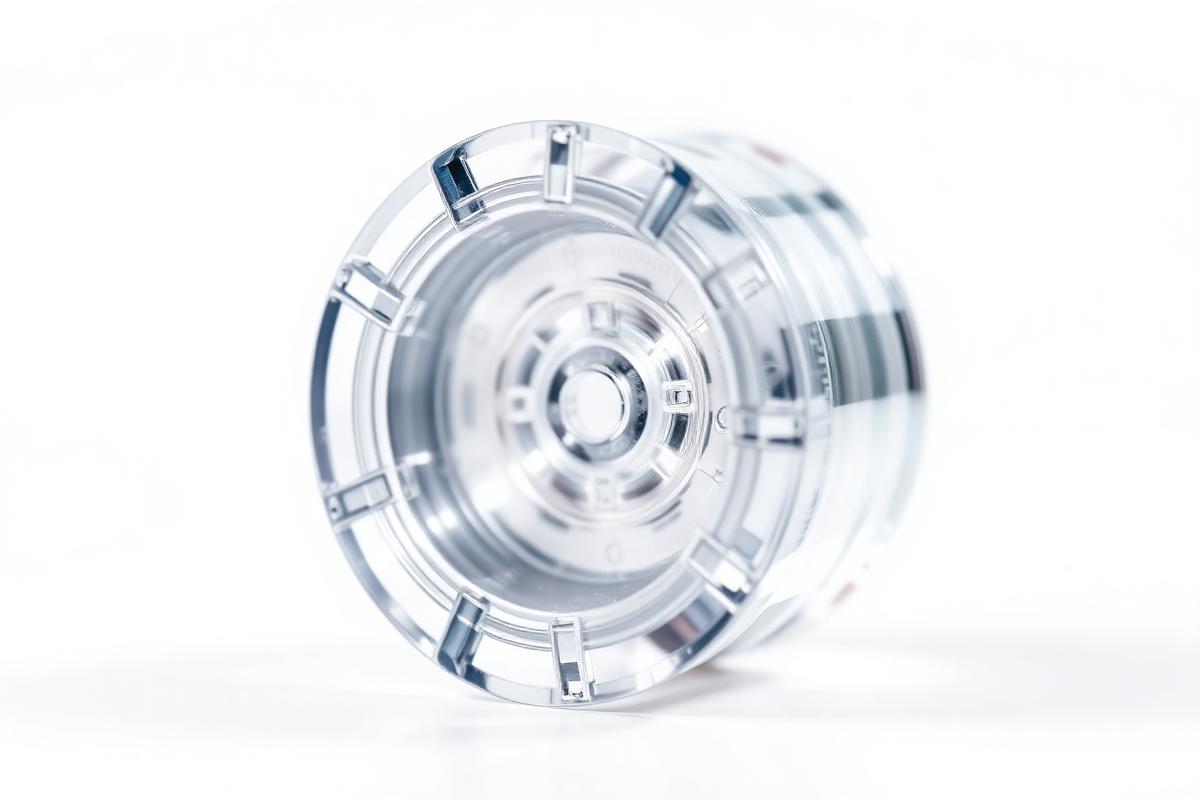 SLA · ± 0.1 mm typical
How SLA works
- 01
A UV laser traces each cross-section in a resin vat.
- 02
Cured layers adhere to the build platform as it steps upward.
- 03
Parts are washed in IPA and post-cured under UV.
- 04
Support nibs are sanded to a uniform finish.
Strengths
- Finest surface quality
- ±0.05 mm capable
- Optically clear options
- Sharp detail
Limitations
- More brittle than thermoplastics
- UV sensitivity
- Smaller build volume
Design rules for SLA
Full guidance in the interactive design guide.
| Minimum wall (unsupported) | 0.6 mm |
| Minimum wall (supported) | 0.4 mm |
| Minimum hole diameter | 0.75 mm |
| Minimum feature size | 0.2 mm |
| Moving-part clearance | 0.3 mm |
| Minimum embossed text | 1.0 mm height, 0.4 mm depth |
| Overhang threshold | Supports auto-generated; avoid large flat down-facing areas |
| Max build dimensions | 300 × 335 × 200 mm |
- Hollow large volumes to 2–3 mm walls with drain holes to reduce cost.
- Cured resins are UV-sensitive — specify a coating for outdoor use.
- Small text and knurling reproduce crisply at 0.2 mm feature size.
Compare with other processes
All technologiesFDM / FFF
Fast, economical thermoplastic parts for prototypes, jigs and fixtures.
± 0.2 mm typical · 350 × 350 × 350 mm
SLS
Strong, isotropic nylon parts with no supports — built for end use.
± 0.3 mm typical · 330 × 330 × 400 mm
MJF
Production nylon at scale with fine detail and consistent mechanicals.
± 0.2 mm typical · 380 × 284 × 380 mm